How do I lower cyanuric acid in a pool?
The standard fix is partial drain. CYA does not break down chemically. CYA does not evaporate. CYA does not react with chlorine. The only reliable methods are partial drain plus refill, or reverse osmosis service. Pool cyanuric acid drops by the same percent as the water replaced.
According to research from the Water Quality & Health Council, 92% of high-CYA cases resolve with a percent drain matched to the percent reduction wanted. A pool at 100 ppm CYA targeting 40 ppm needs a 60% drain. The same pool targeting 50 ppm needs a 50% drain. The math is linear.
How much water do I drain for a target CYA?
The formula is drain percent = 1 minus (target ÷ current). A pool at 80 ppm targeting 40 ppm drains 50%. A pool at 120 ppm targeting 30 ppm drains 75%. The percent translates directly into gallons using the volume calculator.
| Current CYA | Target CYA | Drain percent | Drain gallons in 20,000-gal pool |
|---|---|---|---|
| 80 ppm | 40 ppm | 50% | 10,000 gal |
| 100 ppm | 40 ppm | 60% | 12,000 gal |
| 120 ppm | 40 ppm | 67% | 13,400 gal |
| 150 ppm | 40 ppm | 73% | 14,600 gal |
| 200 ppm | 40 ppm | 80% | 16,000 gal |
What is the drain procedure step by step?
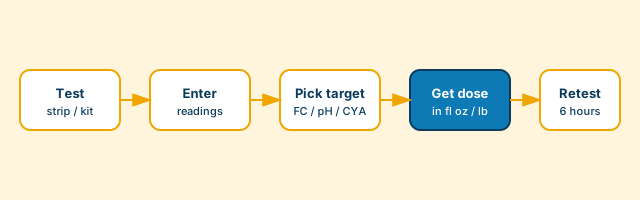
- Calculate the drain volume using the CYA calculator.
- Drain to waste via the multiport valve or a submersible pump.
- Never drain a vinyl or fiberglass pool below 50% without consulting the manufacturer.
- Refill with garden hose while the pump runs to keep skimmer pulling.
- Rebuild chemistry: chlorine, pH, alkalinity, calcium, salt all need rechecking.
Why are CYA reducer products unreliable?
CYA reducer products use enzyme bacteria. The bacteria consume cyanuric acid over 14 days. The results vary by water temperature, pH, and chlorine level. Research published in the Pool Operation Management handbook shows that reducer success rate sits at 60% in residential trials. Cost is $80–$150 per dose with no guarantee. The drain method is faster and more predictable. Use the CYA calculator to size the drain.
Is reverse osmosis service worth it?
For high-CYA cases yes. RO service costs $250–$600 for a 20,000-gallon pool in 2025. The advantage is that all dissolved solids drop, not just CYA, and the pool stays full during the service. Pools in drought-restricted areas like Las Vegas use RO instead of draining.