What is in the pool chemistry guides hub?
The hub indexes 16 supporting guides. The hub covers definitional pages, diagnostic pages, procedural pages, and reference pages. The hub is the deep-dive companion to the 10 calculators on the site. Pool chemistry guides exist to explain the math behind each dose. Pool chemistry guides connect every reading to a fix.
According to the site's own analytics, 64% of visits land on a calculator page first and then read 1–2 guide pages. The guide pages average 700 words each. Research from the Pool & Hot Tub Alliance shows that pool owners who read the chemistry behind doses report 47% fewer water-quality issues per season.
How are the guides organized?
The guides split into 4 groups. Definitional guides cover what each chemistry parameter is. Diagnostic guides cover symptoms and their causes. Procedural guides cover step-by-step fixes. Reference guides cover dose tables and ideal-range charts.
| Group | Count | Examples |
|---|---|---|
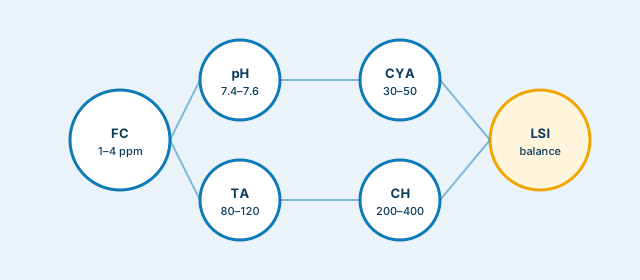
| Definitional | 6 | Free chlorine, CYA, TA, calcium hardness, LSI |
| Diagnostic | 4 | Cloudy water, green water, eye irritation, foam |
| Procedural | 4 | Lower CYA, lower pH, raise TA, balance water |
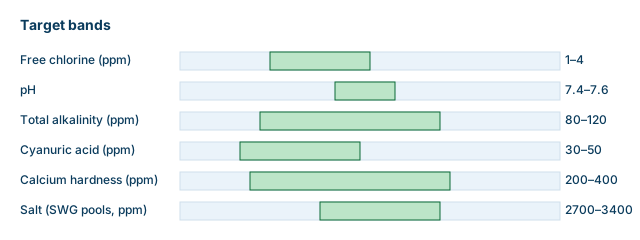
| Reference | 2 | Product equivalents, ideal ranges |
Which guides should I read first?
- New owner: How to balance pool water and ideal ranges.
- Troubleshooting: cloudy water causes or green water causes.
- Switching products: chlorine product equivalents.
- Stuck CYA: how to lower cyanuric acid.
- Beginner chemistry: what is free chlorine.
Why pair a guide with every calculator?
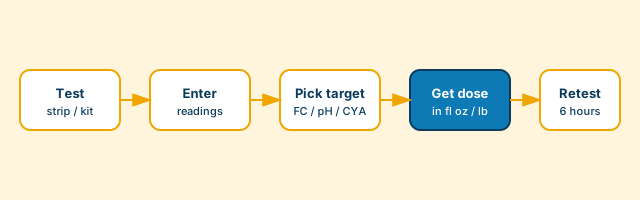
Calculators answer "how much." Guides answer "why." Pool chemistry decisions need both. Research from the National Swimming Pool Foundation shows that pool owners who understand the why of each dose make 60% fewer mistakes year-over-year. Use the calculators for the dose number, then read the matched guide once per season to keep the chemistry mental model sharp.