How does this pool calcium hardness calculator work?
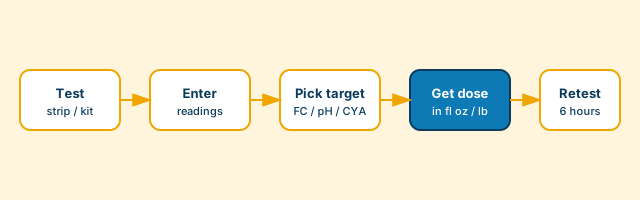
This pool calcium hardness calculator is a free browser tool. The calculator returns the pounds of calcium chloride needed to raise hardness to a target. The calculator returns the percent of pool water to drain if hardness is too high. Pool calcium hardness is the dissolved calcium in pool water, measured in ppm CaCO₃. Pool calcium hardness drives water balance, plaster lifespan, and salt cell efficiency.
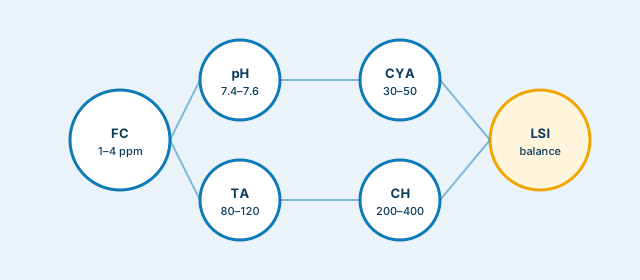
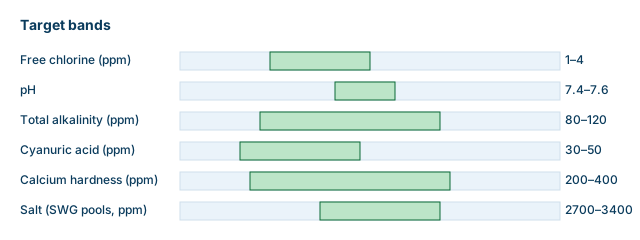
The ideal calcium hardness band is 200–400 ppm for plaster pools and 175–225 ppm for vinyl pools. According to the Pool & Hot Tub Alliance handbook, pools below 150 ppm are corrosive and pools above 500 ppm are scaling. Research from the National Plasterers Council shows that pool plaster service life drops 30% when hardness sits below 150 ppm for more than 60 days.
How much calcium chloride to raise hardness per 10,000 gallons?
The dose is 1.25 lb of calcium chloride (77% dihydrate pellet) per 10 ppm hardness raise per 10,000 gallons. A 50 ppm raise in 10,000 gallons needs 6.25 lb. The same raise in 20,000 gallons needs 12.5 lb. The same raise in 30,000 gallons needs 18.75 lb. Granular calcium chloride is the standard product at 77% purity. The flake form dissolves faster than the pellet form.
| Hardness raise | 10,000 gal — CaCl₂ | 20,000 gal — CaCl₂ | 30,000 gal — CaCl₂ |
|---|---|---|---|
| 25 ppm | 3.13 lb | 6.25 lb | 9.38 lb |
| 50 ppm | 6.25 lb | 12.5 lb | 18.75 lb |
| 100 ppm | 12.5 lb | 25 lb | 37.5 lb |
| 150 ppm | 18.75 lb | 37.5 lb | 56.25 lb |
What raises versus lowers calcium hardness?
- Calcium chloride (77%) raises hardness directly; the standard product.
- Cal-hypo shock raises hardness 4–7 ppm per 1 ppm chlorine; cumulative over a season.
- Tap water raises hardness if local water is above 150 ppm; check before refilling.
- Partial drain and refill is the only safe way to lower; no chemical lowers calcium without side effects.
Why does low calcium attack plaster?
Pool plaster is calcium-based. Pool water below 150 ppm calcium pulls calcium out of plaster to reach equilibrium. The result is etching, pitting, and surface roughness. Research from the National Plasterers Council shows that a 60-day exposure below 150 ppm reduces plaster lifespan by 4–8 years on a 20-year warranty pool. Use the saturation index calculator to confirm the LSI lands between -0.3 and +0.3.
How does calcium interact with chlorine?
The interaction is small but real. Calcium chloride does not raise pH. Calcium chloride does not raise alkalinity. Calcium chloride raises only the calcium reading. According to research published in the Pool Operation Management handbook, a 100 ppm calcium raise via CaCl₂ shifts pH by less than 0.1 unit. Use the chlorine calculator to maintain free chlorine during the dissolution window.