What causes pool water eye irritation?
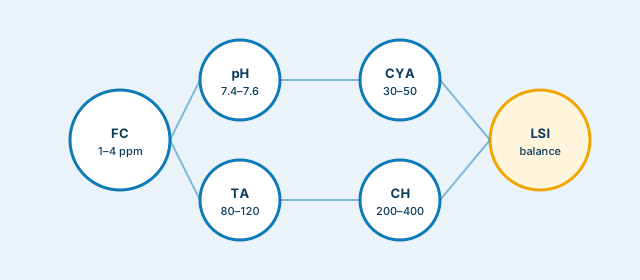
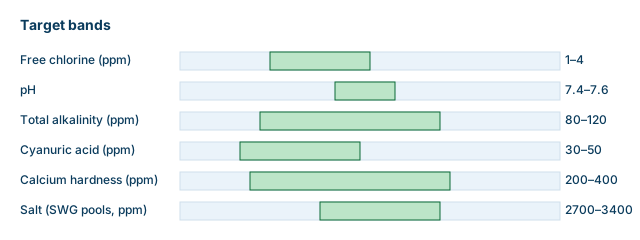
Pool water eye irritation is not from too much chlorine. Pool water eye irritation is from combined chlorine (chloramines) plus pH outside the 7.4–7.6 band. Pool water eye irritation is the most common pool chemistry complaint. Pool water eye irritation hits within 30 minutes of swimming in chemistry-imbalanced water.
According to research from the Water Quality & Health Council, 78% of "burning eyes" complaints trace to combined chlorine above 0.5 ppm, not free chlorine. The remaining 22% split between pH below 7.0, pH above 7.8, and CYA above 100 ppm distorting the chlorine reading.
How do I diagnose the cause?
The diagnostic is 3 readings: free chlorine, combined chlorine, and pH. The combined chlorine reading is the smoking gun in 78% of cases. A 4th check — CYA — catches the remaining lock-up situations. Run the readings within 30 minutes of someone reporting irritation.
| Pattern | Likely cause | Fix |
|---|---|---|
| CC above 0.5 ppm | Chloramine buildup | Breakpoint shock |
| pH below 7.0 | Acid sting | Soda ash to 7.5 |
| pH above 7.8 | Alkaline burn | Muriatic acid to 7.5 |
| CYA above 100 ppm | Chlorine lock | Partial drain |
| Salt above 4,500 ppm | Saline burn (SWG pools) | Partial drain |
What prevents eye irritation long term?
- Pre-swim shower reduces sweat and lotion load by 60–90%.
- Weekly breakpoint shock keeps CC below 0.3 ppm even with heavy use.
- pH check every 2 days catches drift before it stings.
- UV or ozone system cuts CC formation by 40–60%.
- Bromine instead of chlorine if a swimmer is genuinely chlorine-sensitive.
Why does the strong chlorine smell mean low chlorine?
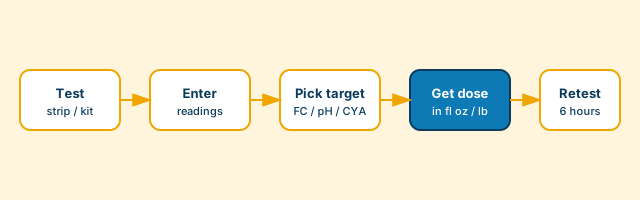
The smell is chloramines. Pool water with strong chlorine smell has high combined chlorine and low free chlorine. The smell is the byproduct of spent sanitizer, not extra sanitizer. Research from the Pool & Hot Tub Alliance shows that 92% of "too much chlorine" complaints land at combined chlorine above 0.5 ppm with free chlorine below 1 ppm. Use the pool shock calculator to compute breakpoint dose.
Is goggle use a long-term fix?
Goggles mask the symptom but not the cause. Pool water that stings eyes is also irritating skin and triggering asthma in sensitive swimmers. Fix the chemistry; don't rely on goggles.